The Small Portfolio Mistakes That Cost Big Opportunities
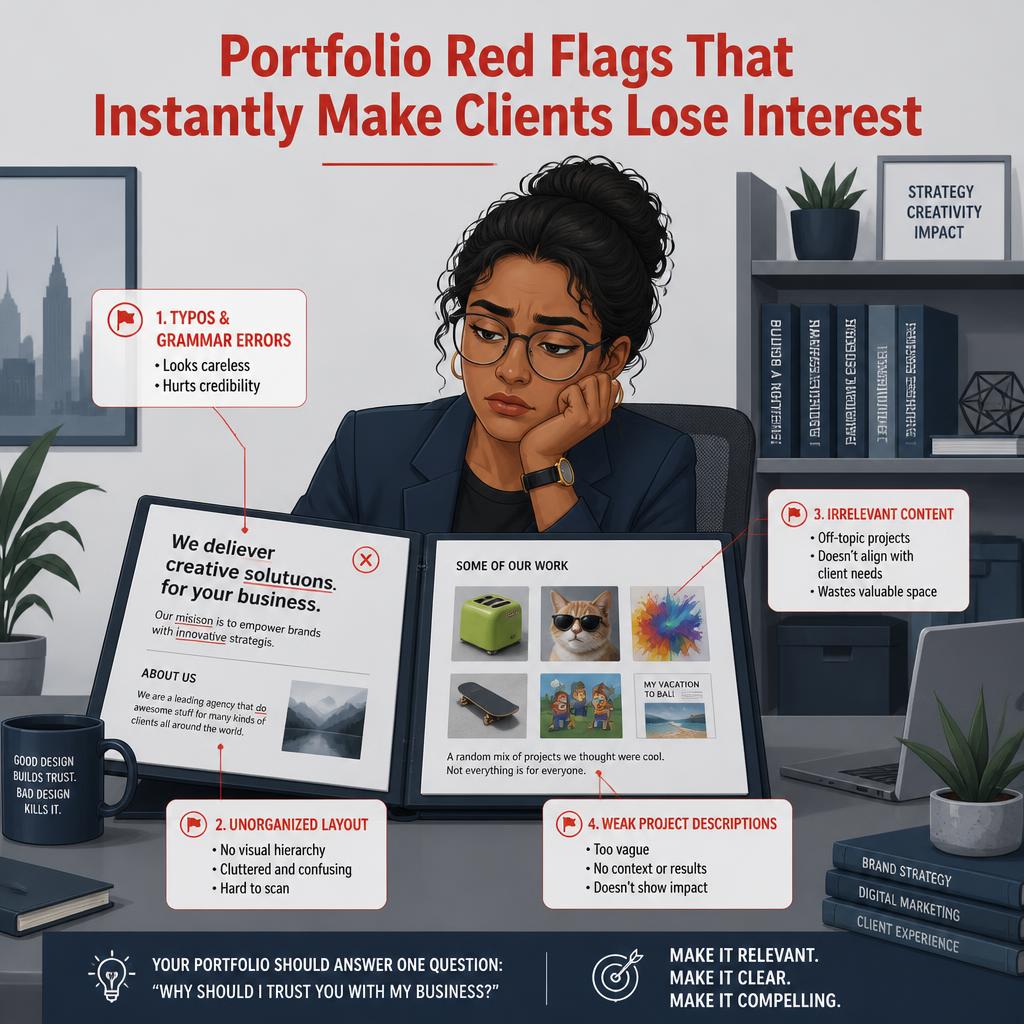
asorillasdoulla – Portfolio Red Flags That Instantly Make Clients Lose Interest are often surprisingly small details that many freelancers, designers, writers, photographers, developers, and creative professionals overlook. A portfolio may contain incredible work, but if the presentation feels messy, outdated, confusing, or generic, potential clients can lose trust within seconds.
That first impression matters more than most people realize. Clients usually skim before they commit. They want fast proof that you understand quality, professionalism, communication, and results. If your portfolio creates friction, uncertainty, or doubt, they may leave without ever contacting you.
The good news is that most portfolio problems are fixable. Once you know what clients notice first, you can improve your portfolio strategically and turn it into a tool that actually wins projects.
Why Clients Judge Portfolios So Quickly
Attention Spans Are Shorter Than Ever
Modern clients compare multiple creators at once. Whether they are hiring a graphic designer, web developer, illustrator, marketer, or video editor, they often open several portfolios in separate tabs and decide quickly who looks trustworthy.
That means your portfolio must answer critical questions immediately:
- Who are you?
- What do you do?
- Who do you help?
- Why should someone trust you?
- How good is your work?
- What results can you deliver?
If those answers are unclear, visitors move on.
First Impressions Feel Permanent
People naturally associate presentation quality with work quality. Even if your skills are strong, a poor portfolio design can make your work appear amateur.
A clean and focused portfolio instantly signals confidence and professionalism.
Outdated Design Is One of the Biggest Warning Signs
Old Visual Styles Make Clients Doubt Your Skills
One major mistake clients notice immediately is an outdated portfolio design. This happens across many industries, especially in creative fields.
Common Signs of an Outdated Portfolio
Cluttered layouts
Too many colors, overlapping sections, excessive animations, or crowded text blocks create confusion.
Low-quality images
Blurry screenshots, stretched visuals, and pixelated thumbnails make the portfolio feel neglected.
Old trends that no longer work
Flashy effects, tiny fonts, heavy gradients, or outdated interface styles can make your work appear stuck in the past.
Clients often assume:
“If the portfolio looks old, the creator’s skills might also be outdated.”
Weak Homepage Messaging Confuses Visitors
Clients Should Understand Your Value Immediately
One of the fastest ways to lose potential clients is unclear messaging on the homepage.
Visitors should instantly know:
- What service you provide
- Who you work with
- What makes your approach unique
Bad Example
“Creative thinker passionate about innovation.”
This sounds vague and generic.
Better Example
“Helping eCommerce brands increase conversions through clean UX-focused web design.”
The second version explains the service, audience, and value clearly.
Too Many Projects Can Hurt Your Portfolio
Quantity Does Not Always Mean Quality
Many creators believe more projects automatically make them look experienced. In reality, too many average projects weaken the impact of great ones.
Clients remember standout work, not endless scrolling.
Why Overloaded Portfolios Fail
- Important projects become buried
- Visitors feel overwhelmed
- Weak projects reduce trust
- The overall quality feels inconsistent
A focused portfolio with 5–8 excellent case studies often performs better than 40 random projects.
Generic Projects Make You Forgettable
Clients Want Personality and Direction
Another mistake clients notice first is generic work that looks copied from trends without originality.
This usually happens when portfolios contain:
- Fake brand concepts without strategy
- Repetitive layouts
- Template-heavy designs
- Stock-looking visuals
- No explanation behind decisions
Clients are not only evaluating visuals. They are evaluating thinking.
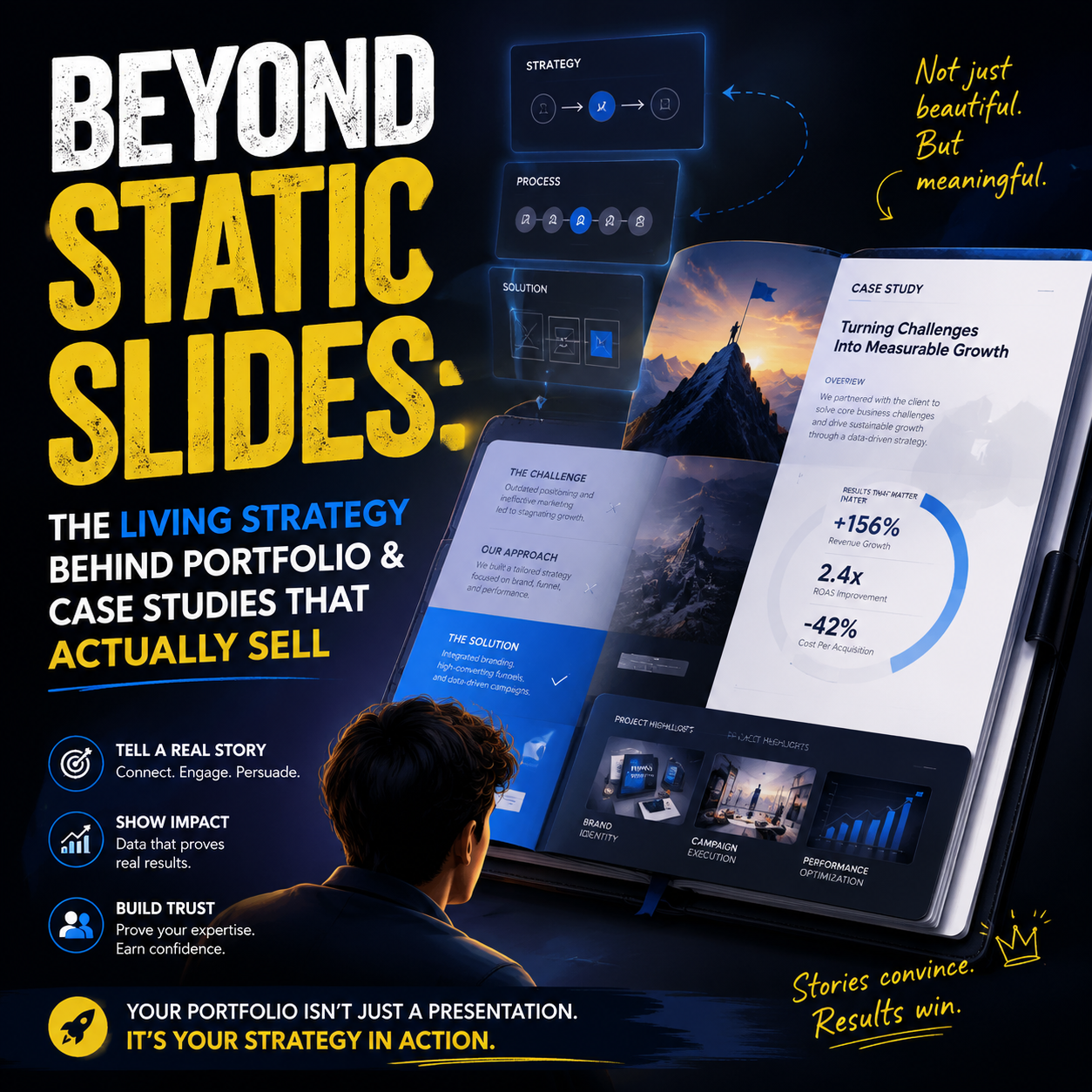
Missing Case Studies Reduce Credibility
Showing the Final Result Is Not Enough
Many portfolios only display finished visuals without context. Clients want to understand the process behind the work.
They want answers to questions like:
- What was the problem?
- Who was the client?
- Why was this approach chosen?
- What challenges appeared?
- What results were achieved?
Without context, projects feel shallow.
What Strong Case Studies Include
Project overview
Explain the client, industry, and goal.
Challenges
Describe the obstacles or limitations.
Process
Show sketches, wireframes, drafts, revisions, or strategy thinking.
Results
Use measurable outcomes whenever possible.
Examples include:
- Increased conversions
- Better engagement
- Higher traffic
- More sales
- Faster load speed
- Improved branding consistency
Poor Mobile Experience Drives Clients Away
Most Clients Check Portfolios on Phones
A portfolio that looks perfect on desktop but breaks on mobile creates frustration instantly.
Common Mobile Problems
Text too small
Users should not zoom in just to read.
Broken layouts
Images overlapping or sections shifting incorrectly damage credibility.
Slow loading times
Heavy files and unoptimized media create poor experiences.
Difficult navigation
Menus should remain simple and intuitive.
A mobile-friendly portfolio is no longer optional.
Weak Typography Quietly Damages Trust
Fonts Influence Readability and Professionalism
Typography is often ignored, yet clients notice it subconsciously.
Portfolio Typography Mistakes
- Using too many fonts
- Tiny paragraph text
- Poor spacing
- Hard-to-read script fonts
- Low contrast between text and background
Clean typography improves readability and keeps visitors engaged longer.
Lack of Personal Branding Makes You Invisible
Clients Remember Distinct Personalities
Many portfolios fail because they feel emotionally empty.
A strong portfolio should reflect:
- Your voice
- Your style
- Your expertise
- Your niche
- Your perspective
Personal Branding Is Not Just About Logos
Some creators think branding only means having a personal logo. In reality, branding is the overall feeling people remember after visiting your portfolio.
Strong branding includes:
Consistent visual style
Colors, layout, and imagery should feel connected.
Clear communication tone
Your writing style should sound natural and confident.
Defined specialization
Clients trust specialists faster than generalists.
No Client Testimonials Creates Doubt
Social Proof Matters More Than Ever
Potential clients want reassurance before spending money.
Testimonials help answer:
- Was the client satisfied?
- Was communication smooth?
- Were deadlines respected?
- Did the project produce results?
Even short testimonials improve credibility significantly.
What Makes Testimonials More Effective
- Real names
- Company names
- Specific results
- Authentic language
- Project details
Generic praise feels less trustworthy.
Bad Navigation Kills User Experience
Clients Should Never Feel Lost
If users cannot find information quickly, they leave.
Common Navigation Mistakes
Too many menu items
Complex menus create confusion.
Hidden contact buttons
Clients should always know how to reach you.
Endless scrolling without structure
Organized sections improve readability.
Missing project categories
Grouping work by industry or service helps visitors navigate faster.
Simple navigation always wins.
Spelling Errors and Broken Links Look Unprofessional
Small Mistakes Create Big Trust Issues
Typos, broken pages, and outdated information immediately reduce confidence.
Clients often associate attention to detail with work quality.
Things to Double-Check Regularly
- Grammar
- Contact forms
- Social media links
- Portfolio images
- Project descriptions
- Loading speed
- Resume downloads
Even one broken element can create hesitation.
Ignoring Results Makes Your Work Feel Empty
Clients Care About Outcomes, Not Just Aesthetics
A beautiful project means little if there is no proof it worked.
Whenever possible, explain measurable impact.
Examples of Strong Results
- “Increased newsletter signups by 48%”
- “Reduced bounce rate by 31%”
- “Boosted product sales during launch week”
- “Improved booking conversions”
Results turn creative work into business value.
How to Make Your Portfolio Instantly Stronger
Focus on Clarity First
A great portfolio is easy to understand.
Start by simplifying:
- Homepage messaging
- Navigation
- Project structure
- Typography
- Visual hierarchy
Remove Weak Projects
Curate aggressively. One excellent project creates more impact than five average ones.
Show More Thinking
Clients hire problem-solvers, not just creators. Explain your decisions and process clearly.
Update Your Portfolio Consistently
Your portfolio should evolve alongside your skills.
Review it every few months and ask:
- Does this still represent my best work?
- Is the information current?
- Does the design still feel modern?
- Would I hire myself based on this portfolio?
Portfolio Red Flags That Instantly Make Clients Lose Interest often come down to clarity, presentation, trust, and user experience. Clients notice outdated visuals, weak messaging, poor navigation, generic projects, and missing results almost immediately. Even talented professionals lose opportunities because their portfolios fail to communicate value effectively.
A strong portfolio does more than showcase work. It tells a story, builds confidence, demonstrates expertise, and guides clients toward taking action. By improving structure, simplifying design, adding real case studies, and focusing on results, you can transform your portfolio from something people casually browse into something they genuinely remember.