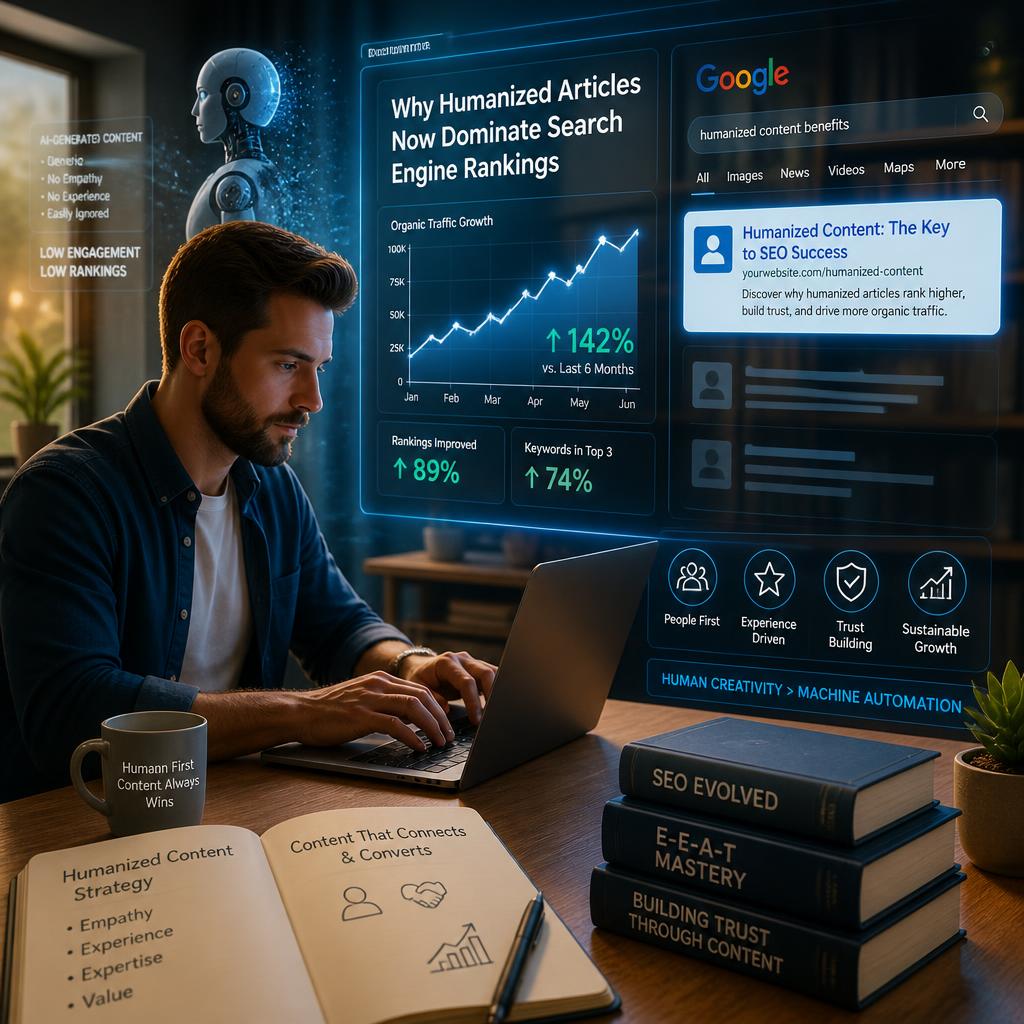
Humanized Content SEO: Why Authentic Writing Wins Google Rankings shows how modern search engines prioritize natural tone, user intent, and meaningful value over mechanical keyword-stuffed content in today’s competitive digital landscape. – asorillasdoulla
The Rise of Humanized Content in Modern SEO
Search engines have evolved far beyond simple keyword matching. Today, they evaluate how readers interact with content, not just what words appear on the page. As a result, humanized content has become a core ranking factor. This shift reflects how people actually search, read, and engage online.
Google’s algorithms now analyze context, satisfaction signals, and behavioral patterns. Websites that write for humans instead of machines naturally rise in rankings because they solve real problems in a clear and engaging way.
Algorithm Shift Toward Search Intent
Modern algorithms focus heavily on search intent. Instead of asking “Does this page contain the keyword?”, systems now ask “Does this page fully answer the user’s question?”
This transformation rewards clarity, depth, and relevance. Content that feels natural and conversational aligns better with how users think and search in real life.
What Makes Content Truly Humanized
Humanized content reflects how people speak, think, and process information. It avoids robotic phrasing and prioritizes readability. More importantly, it creates a sense of trust between the writer and the reader.
Search engines measure this indirectly through engagement signals such as time on page and bounce rate. The more natural the content feels, the longer users stay.
Natural Language Patterns
Humanized writing uses conversational flow, varied sentence structure, and simple explanations. It avoids repetitive phrasing and overly technical patterns unless necessary.
This style mirrors real communication, making content easier to understand and more enjoyable to read.
Emotional Connection and Trust
Emotion plays a silent but powerful role in SEO. When content feels relatable, readers trust it more. Trust leads to higher engagement, sharing, and return visits—all strong signals for ranking performance.
Why Humanized Articles Dominate Rankings
Search engines now reward content that satisfies users completely. Humanized articles outperform others because they reduce confusion and increase satisfaction.
They also improve readability, which directly influences how users interact with a page. In competitive niches, this becomes the deciding factor between ranking on page one or being buried.
Engagement Signals Matter More
Metrics like dwell time, scroll depth, and interaction rates now carry significant weight. When users stay longer on a page, search engines interpret it as high-quality content.
Humanized writing naturally increases these metrics because it keeps readers engaged from start to finish.
Improved User Experience
A smooth reading experience matters more than ever. Clear structure, simple language, and logical flow help users find answers faster. This reduces frustration and improves overall perception of the website.
Who Benefits from Humanized Writing
Bloggers, marketers, businesses, and SEO professionals all benefit from humanized content. Small websites can compete with larger domains if they focus on clarity and usefulness rather than technical SEO tricks.
Even e-commerce platforms see better conversion rates when product descriptions feel natural and persuasive instead of robotic.
Where It Impacts SEO Performance
Humanized content influences multiple areas of SEO performance, including organic visibility, click-through rates, and backlink potential. Pages that feel authentic are more likely to be shared and referenced by others.
This creates a natural growth cycle where better content attracts more authority signals over time.
When the Shift Happened in Search Engines
The shift toward humanized content began accelerating with major algorithm updates focused on user experience and intent. Over time, keyword density became less important, while quality and satisfaction became central.
Today, search engines continuously refine their ability to detect natural writing patterns versus automated or spam-like content.
How to Create Humanized SEO Articles
Creating humanized content requires a balance between SEO strategy and natural writing. Start by understanding your audience’s intent, then structure content around their needs instead of keyword placement.
Use storytelling, real examples, and simple explanations to maintain flow. Avoid over-optimization and let the content breathe naturally.
Practical Writing Steps
Focus on clarity first, then optimize. Write as if you are explaining the topic to a real person sitting next to you. Use transitions like however, therefore, and in addition to maintain flow without sounding mechanical.
Common Mistakes to Avoid
Many writers still overuse keywords or rely on AI-generated repetition. This creates flat, unengaging content that fails to retain readers.
Another mistake is ignoring readability. Long, complex sentences reduce engagement and increase bounce rates, which negatively impacts SEO performance.
FAQ
Why is humanized content important for SEO?
Because it improves engagement, satisfaction, and trust, which are key ranking signals.
Does Google detect AI-written content?
Google focuses more on quality and usefulness rather than origin. Poorly written automated content, however, performs worse.
How long should humanized SEO articles be?
Length depends on intent, but depth and clarity matter more than word count.
Can humanized writing improve conversions?
Yes, because readers trust content that feels natural and relatable.
The evolution of search engines has made one thing clear: content must serve humans first. Websites that embrace clarity, emotion, and natural flow consistently outperform those relying on mechanical optimization. In the end, Humanized Content SEO: Why Authentic Writing Wins Google Rankings is not just a trend—it is the foundation of modern digital success.