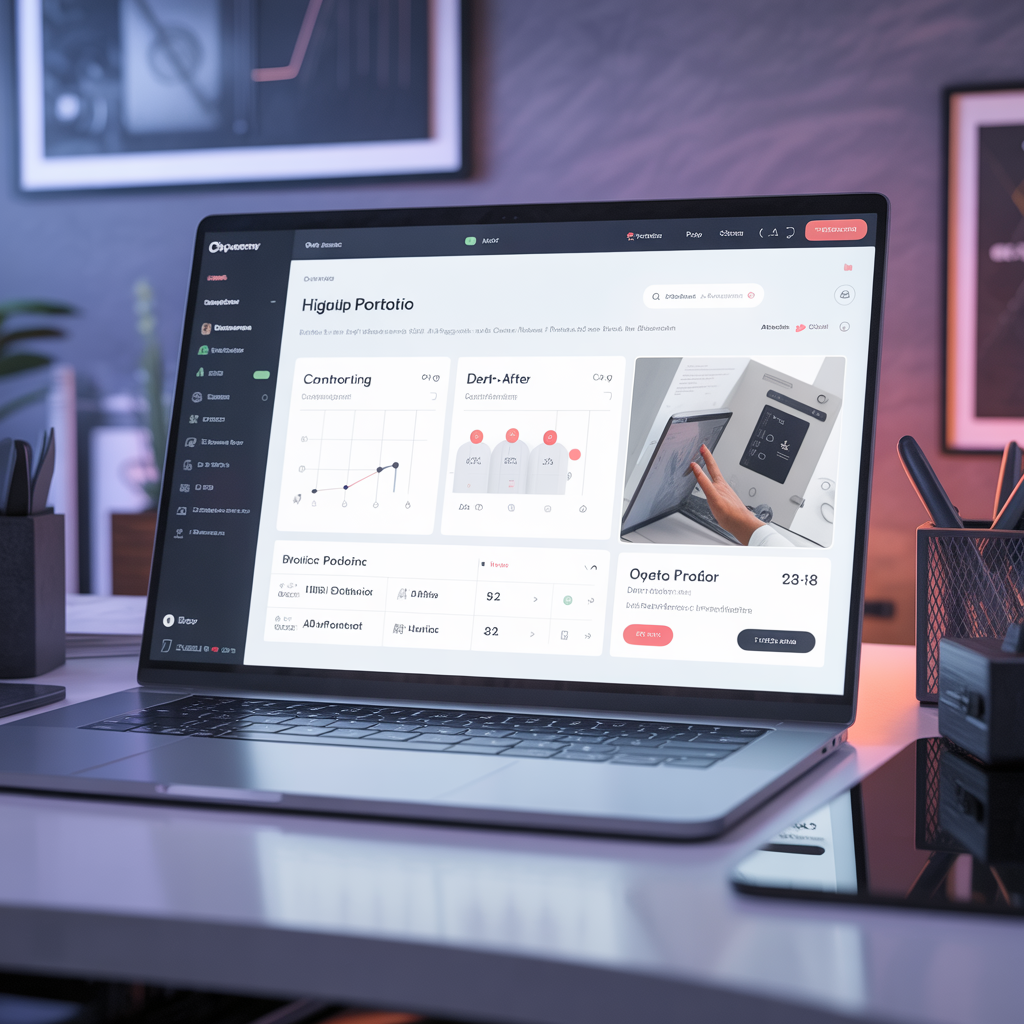
Subtitle: How Strong Project Showcases Turn Experience Into Business Growth
Portfolio & Case Studies That Build Trust and Drive More Clients
Portfolio & Case Studies That Build Trust and Drive More Clients are among the most effective tools for demonstrating expertise, proving results, and attracting qualified prospects. Whether you are a freelancer, agency, consultant, or business owner, a well-structured portfolio combined with compelling case studies helps potential clients understand what you do, how you do it, and why they should trust you. – asorillasdoulla
In today’s competitive market, people rarely make decisions based on promises alone. Instead, they want evidence, examples, and measurable outcomes before investing their time or money.
What Are Portfolio & Case Studies?
A portfolio is a collection of completed work that showcases your skills, achievements, and capabilities. A case study goes a step further by explaining the process, challenges, solutions, and results behind a specific project.
Together, they provide both visual proof and strategic context that help audiences make informed decisions.
Why They Matter More Than Traditional Marketing
Modern buyers are increasingly skeptical of advertising claims. They want transparency and proof.
When visitors see real projects and documented outcomes, they gain confidence in your abilities. As a result, conversion rates often improve because prospects can visualize how your services might help them achieve similar success.
Building Credibility Through Evidence
Anyone can claim expertise. However, portfolios and case studies provide tangible examples that validate those claims.
By presenting actual work and measurable outcomes, you create trust before the first conversation even begins.
Reducing Buyer Uncertainty
People naturally hesitate when facing unfamiliar choices. Case studies reduce that uncertainty by showing clear examples of challenges solved and goals achieved.
Key Elements of an Effective Portfolio
A portfolio should do more than display attractive images or completed projects. It should communicate value.
Clear Project Descriptions
Explain what the project involved, who it was for, and what objectives needed to be achieved.
Short descriptions help visitors quickly understand the scope and relevance of your work.
High-Quality Visual Presentation
Images, screenshots, videos, and mockups should be professional and easy to view on all devices.
A clean presentation improves user experience and keeps attention focused on your achievements.
Demonstrated Results
Whenever possible, include measurable outcomes such as increased traffic, higher sales, improved engagement, or enhanced efficiency.
Numbers often tell a stronger story than general statements.
How to Structure Powerful Case Studies
Case studies work best when they follow a logical framework.
The Challenge
Begin by explaining the problem or obstacle that existed before the project started.
What issue needed solving? Why was it important?
The Strategy
Next, outline the approach used to address the challenge.
Describe the planning process, tools, methods, and decisions that guided the project.
Focus on Actions Taken
Instead of simply listing services, explain how specific actions created progress.
Readers want to understand the reasoning behind your approach.
The Outcome
Conclude with measurable results and key achievements.
This section often has the greatest influence because it demonstrates real-world effectiveness.
Who Benefits Most From Portfolio & Case Studies?
Nearly every professional industry can benefit from showcasing work and outcomes.
Examples include:
- Marketing agencies
- Web designers
- Architects
- Consultants
- Photographers
- Software developers
- Interior designers
- Content creators
Regardless of industry, prospects want to see proof before making decisions.
Where Should You Publish Them?
Visibility is just as important as quality.
The most effective locations include:
- Company websites
- Service pages
- Personal websites
- Professional networks
- Industry directories
- Client presentations
Many businesses also create dedicated resource sections featuring professional project success stories that naturally attract organic search traffic and potential clients.
When Should You Update Your Portfolio?
Your portfolio should be treated as a living asset rather than a one-time project.
Update it whenever:
- You complete significant projects
- Results improve over time
- New services are introduced
- Industry trends change
- Better examples become available
Regular updates keep your content relevant and competitive.
Common Mistakes to Avoid
Even experienced professionals sometimes weaken their portfolios through avoidable mistakes.
Including Too Many Projects
Quality consistently outperforms quantity.
Showcase your strongest work instead of overwhelming visitors with every project you’ve completed.
Ignoring Results
Beautiful designs and creative work matter, but outcomes matter more.
Always connect your work to business objectives whenever possible.
Using Vague Language
Specific details create credibility.
Replace generic statements with clear examples, processes, and measurable achievements.
Future Trends in Portfolio Presentation
Technology continues to influence how professionals present their work.
Interactive case studies, video walkthroughs, data visualizations, and AI-enhanced presentations are becoming increasingly common.
As user expectations evolve, portfolios that combine storytelling with measurable results will continue to stand out.
Frequently Asked Questions
What is the difference between a portfolio and a case study?
A portfolio showcases completed work, while a case study explains the process, challenges, strategies, and outcomes behind a specific project.
How many projects should a portfolio contain?
There is no fixed number. Most professionals benefit from featuring their strongest 5–15 projects rather than displaying every completed assignment.
Should case studies include metrics?
Yes. Metrics strengthen credibility and help demonstrate the effectiveness of your solutions.
How often should portfolios be updated?
Ideally, portfolios should be reviewed every few months and updated whenever significant projects or results become available.
Can small businesses benefit from case studies?
Absolutely. Even a single well-documented success story can build trust and influence purchasing decisions.
Conclusion
Strong Portfolio & Case Studies That Build Trust and Drive More Clients help transform experience into persuasive proof. By combining compelling visuals, clear storytelling, strategic insights, and measurable results, businesses and professionals can establish credibility, reduce buyer hesitation, and generate more opportunities. As competition continues to grow across industries, investing in high-quality portfolio content and detailed case studies remains one of the most effective ways to showcase expertise and win client confidence.