Portfolio That Actually Converts: Real Case Study Breakdowns That Turn Views Into Clients
asorillasdoulla – Portfolio That Actually Converts: Real Case Study Breakdowns That Turn Views Into Clients isn’t just another buzz phrase—it’s the difference between being overlooked and getting hired. You can have stunning visuals, slick animations, and still hear nothing back. So what’s going wrong? And more importantly, what actually works?
Let’s break it down—real examples, real structure, real results.
What Makes a Portfolio Convert (Not Just Impress)?
A converting portfolio answers one simple question:
“Why should someone hire you instead of someone else?”
The Core Elements That Matter
- Clear positioning (what you do)
- Target audience (who you serve)
- Proof of results (why you’re credible)
- Easy next step (how to contact you)
Most portfolios fail because they focus on showing work, not selling outcomes.
Case Study #1 — The Freelance Designer Who Doubled Client Inquiries
Before: Pretty but Passive
- Clean layout
- Lots of images
- Minimal text
- No explanation of results
It looked good—but didn’t convert.
The Problem
Visitors didn’t understand:
- What problems were solved
- Who the work was for
- Why it mattered
After: Strategic Storytelling
The redesign focused on:
- Adding context to each project
- Explaining before vs after
- Highlighting measurable impact
The Result
- 2x increase in client inquiries
- Higher-quality leads
- Faster decision-making from prospects
Who Should You Design Your Portfolio For?
Here’s where most people get it wrong—they design for everyone.
Define Your Ideal Client
Ask yourself:
- Who do you want to work with?
- Where do they usually find talent?
- What do they care about most?
Example
If you target startups:
- Focus on speed, growth, scalability
If you target corporate clients: - Focus on reliability, process, structure
Your portfolio should feel like it was made specifically for them.
Case Study #2 — Developer Portfolio That Landed a Remote Job
Before: Technical but Confusing
- Lots of code snippets
- Complex explanations
- No real-world use cases
The Issue
Recruiters don’t care about code complexity—they care about:
- Business impact
- Problem-solving ability
After: Simplified and Outcome-Focused
Each project was reframed:
- What problem was solved
- How it was solved
- What result it delivered
The Outcome
- Job offer within 3 weeks
- Increased interview callbacks
- Stronger recruiter engagement
When Should You Update Your Portfolio?
Most people wait too long.
The Right Timing
Update your portfolio:
- After every major project
- When changing your niche
- When results improve
Why It Matters
A stale portfolio signals:
- Lack of growth
- Outdated skills
Consistency builds trust.
Where Should You Showcase Your Portfolio?
Don’t rely on just one platform.
Key Places to Share
- Personal website
- Portfolio platforms
- Direct client pitches
Pro Tip
Your website should be the main hub, while other platforms act as traffic sources.
Case Study #3 — Copywriter Portfolio That Increased Conversion Rates
Before: Generic Samples
- Random writing pieces
- No niche focus
- No metrics
The Missing Link
Clients couldn’t see:
- Results
- ROI
- Real impact
After: Data-Driven Portfolio
Each sample included:
- Conversion rates
- Engagement metrics
- Client outcomes
The Result
- Higher pricing power
- More inbound leads
- Stronger credibility
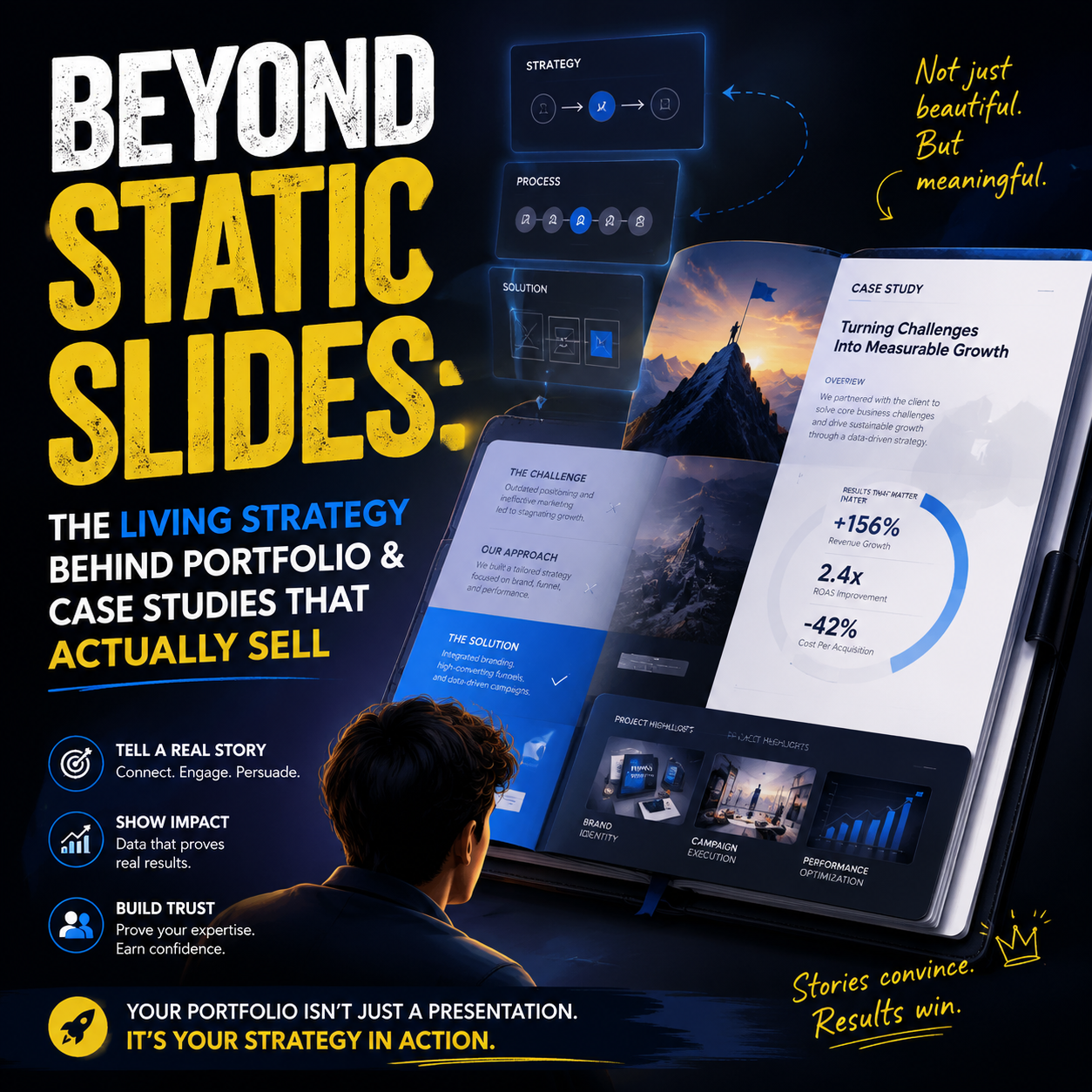
Why Storytelling Beats Showcasing
People don’t buy work—they buy results.
Shift Your Approach
Instead of:
“Here’s what I did”
Say:
“Here’s what changed because of my work”
Structure That Works
- Problem
- Process
- Result
Simple, clear, effective.
How to Build a Portfolio That Converts
Let’s make this practical.
Step-by-Step Framework
1. Define Your Positioning
Be specific. Avoid vague labels like “creative professional.”
2. Choose Relevant Projects
Quality over quantity—3–5 strong case studies beat 15 weak ones.
3. Add Context
Explain:
- Who the client was
- What the challenge was
4. Show Results
Use numbers whenever possible:
- % increase
- Time saved
- Revenue impact
5. Include a Clear CTA
Tell visitors exactly what to do next:
- Book a call
- Send a message
- Request a quote
Common Mistakes That Kill Conversions
Overdesigning Without Purpose
Flashy visuals don’t replace clarity.
Lack of Focus
Trying to appeal to everyone weakens your message.
No Proof of Results
Without evidence, trust drops instantly.
Weak Call-to-Action
If people don’t know what to do, they’ll do nothing.
The Psychology Behind High-Converting Portfolios
Trust Signals
- Testimonials
- Metrics
- Recognizable clients
Clarity Over Creativity
Confusion kills conversions faster than bad design.
Simplicity Wins
Make it easy to:
- Understand
- Navigate
- Take action
Final Takeaways You Can Apply Today
- Focus on results, not just visuals
- Speak directly to your ideal client
- Use real data to build credibility
- Guide users toward action
Portfolio That Actually Converts: Real Case Study Breakdowns That Turn Views Into Clients
Portfolio That Actually Converts: Real Case Study Breakdowns That Turn Views Into Clients proves that success isn’t about having the most beautiful portfolio—it’s about having the most effective one. When you shift from showcasing work to telling results-driven stories, everything changes. More inquiries, better clients, higher rates. That’s the real game.